Author: Sofiia Dubinina
-
28.02.2026
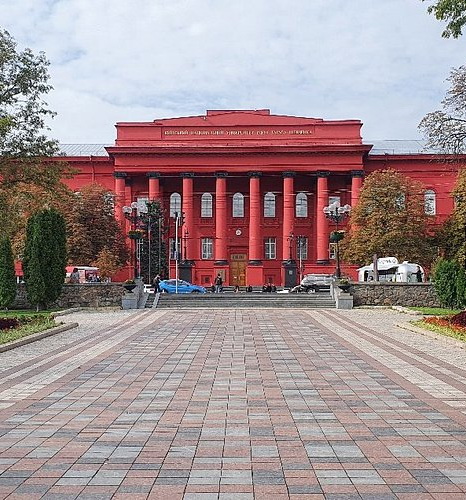
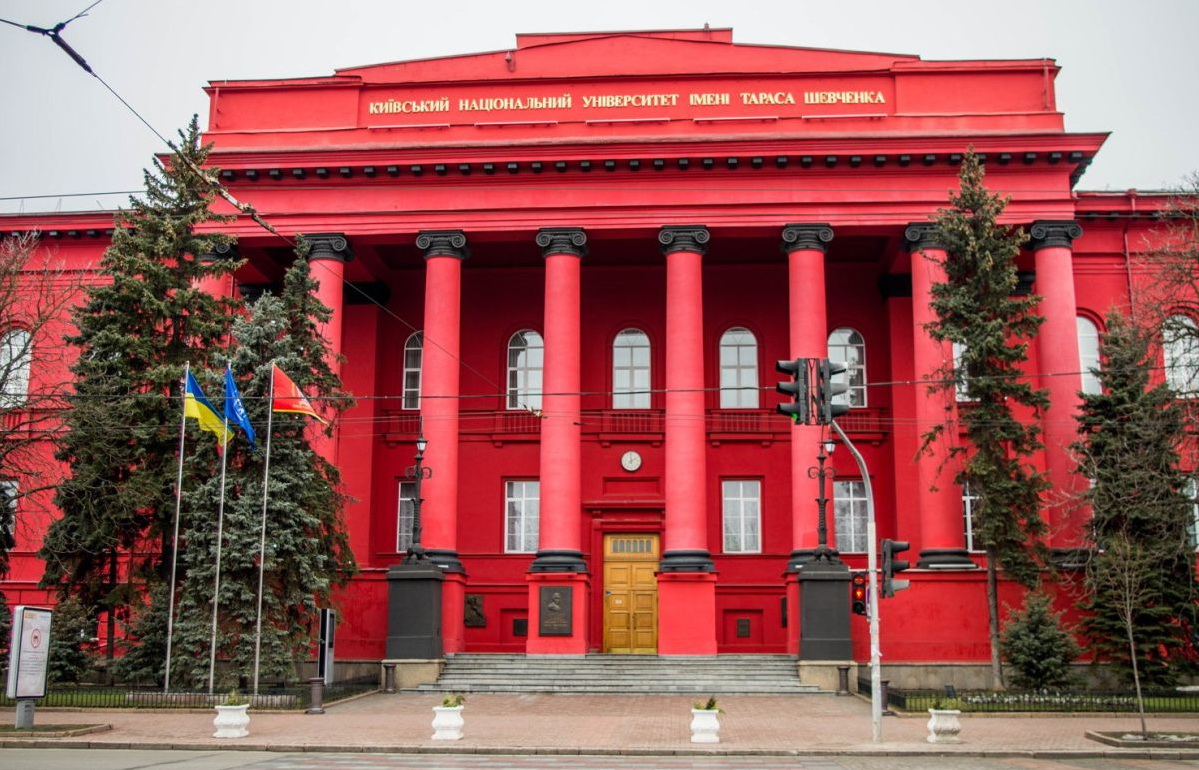
Taras Shevchenko National University of Kyiv
Taras Shevchenko National University of Kyiv is one of the best-known and most highly regarded universities in Ukraine. For almost two centuries, it has played an important role in the country's intellectual, scientific, professional, and public life, educating generations of specialists and future leaders.
For me, this university has not only academic significance but also a very personal meaning. Here, I earned both my Bachelor's and Master's degrees in Law. I then continued my academic education at the Educational and Scientific Institute of Public Administration and Civil Service at Taras Shevchenko National University of Kyiv, where I earned my Master's degree with distinction.
Therefore, for me, KNU is much more than a prestigious university or simply a line on my CV. It is an important part of my personal and professional journey.
A History That Began in 1834
The official history of the university dates back to 1834, when the Imperial University of Saint Vladimir was ceremonially opened in Kyiv. Teaching began on August 28, 1834. Among the university's first academic structures was the Faculty of Philosophy, with historical-philological and physical-mathematical departments. At the same time, legal education held an important place at the university from the very beginning.
Throughout its nearly two-hundred-year history, the university has experienced profound social and political transformations, undergone numerous changes in its structure and name, and nevertheless preserved its essential role as a leading center of education and research.
In 1939, the university was named after the great Ukrainian poet, artist, and public figure Taras Shevchenko.
Today, the university combines its long-standing academic traditions with modern approaches to teaching, research, international cooperation, and professional education.
A University of International Significance
KNU is far more than a single faculty or a handful of institutes.
Today, more than 30,000 students study at the university, choosing from a wide range of degree programmes and academic disciplines. The university comprises faculties, educational and research institutes, colleges, a lyceum, as well as numerous scientific and academic institutions.
KNU's faculties include, among others, the Faculties of Geography, Economics, History, Mechanics and Mathematics, Information Technology, Computer Science and Cybernetics, Psychology, Radiophysics, Electronics and Computer Systems, Sociology, Physics, Philosophy, and Chemistry.
Another important part of the university's structure consists of its educational and research institutes. These include, among others, the Institute of High Technologies, the Institute of International Relations, the Institute of Journalism, the Institute of Geology, the Institute of Philology, the Institute of Biology and Medicine, the Military Institute, the Institute of Continuing Education, as well as the Educational and Scientific Institute of Law and the Educational and Scientific Institute of Public Administration and Civil Service.
This combination of humanities, social sciences, natural sciences, technical disciplines, and public administration makes KNU a comprehensive and diverse academic institution.
The Institute of Law – Education for Legal Professionals
My first major academic chapter at KNU was closely connected with legal education.
The present-day Educational and Scientific Institute of Law at Taras Shevchenko National University of Kyiv continues the university's long-standing tradition of legal education. The Institute has numerous departments and academic units covering virtually all major areas of modern law.
These include, among others, constitutional law, administrative law, criminal law, civil law, financial law, labour law, land and environmental law, intellectual property law, criminal procedure, civil procedure, as well as the theory and history of state and law.
For me, studying at the Institute of Law laid the foundation for my professional way of thinking. My Bachelor's and Master's studies in Law provided me not only with solid legal knowledge, but also with the ability to think analytically, construct persuasive arguments, and approach complex social issues with a strong sense of responsibility.
For me, legal education at KNU means understanding law not in isolation, but always in the context of the state, the economy, international relations, and society.
The Next Step: Public Administration and Civil Service
After completing my legal education, I continued my academic and professional journey in another, closely related field: public administration and civil service.
At the Educational and Scientific Institute of Public Administration and Civil Service at Taras Shevchenko National University of Kyiv, I earned my Master's degree with distinction.
The Institute has a distinctive history. It was established in 2021 following the incorporation of the National Academy for Public Administration under the President of Ukraine into KNU. One of the key objectives was to preserve the Academy's academic and research potential while further developing the education and training of professionals for the civil service and local government.
Today, the Institute educates professionals in public administration and governance, as well as in selected areas related to national security.
For me, this education was a natural continuation of my legal studies.
Law provides an understanding of the rules, while public administration demonstrates how those rules are implemented and applied within state institutions.
That is why I consider the combination of my legal education and my Master's degree in public administration and civil service to be a particularly valuable part of my professional profile.
Achievements and International Recognition
The strength of KNU is reflected not only in its long history and strong reputation. The university is regularly represented in international and national university rankings.
In the QS World University Rankings 2026, Taras Shevchenko National University of Kyiv was ranked 721–730 worldwide. In the 2025 QS ranking, it was placed in the 701–710 range.
The university's results in the European context are particularly noteworthy. In the QS Europe University Rankings 2026, KNU ranked 288th among 958 European universities and 19th in Eastern Europe. It was therefore the highest-ranked Ukrainian university in this ranking.
In the Ukrainian university ranking "TOP-200 Ukraine 2026", KNU also achieved a leading position, ranking 2nd among Ukrainian higher education institutions.
In the Times Higher Education World University Rankings 2026, the university is placed in the 1501+ category worldwide. In individual subject areas, however, it achieves significantly higher positions. In the field of Law, KNU is ranked within the 301–400 range worldwide in the THE 2026 ranking.
As a law graduate, I find this particularly meaningful: the university's international recognition extends beyond its overall academic profile and is also reflected in individual academic disciplines.
KNU Among Ukraine's Leading Faculties and Institutes
The university also demonstrates strong results within the Ukrainian higher education system.
In 2026, Forbes Ukraine published its ranking of the "50 Best Faculties in Ukraine". KNU had the largest number of faculties and institutes represented in the ranking, with 14 of its academic units making the list.
I am particularly pleased that the Educational and Scientific Institute of Law at KNU was also among the leaders, taking 1st place in the category of Law and International Relations.
For me, this gives my own education an additional dimension: my law degree from KNU represents not only the university's long-standing reputation, but also a modern academic education that is recognized both nationally and internationally.
More Than Just a Degree
When I look back on my educational journey today, I see a clear sense of continuity and development.
First came Law: my Bachelor's and Master's studies, providing a solid understanding of the state, law, human rights, and legal mechanisms.
This was followed by public administration and civil service: a Master's degree which I completed with distinction, along with a deeper understanding of state institutions, administrative processes, and public policy.
These two fields naturally complement each other.
A legal professional should not only understand the law itself, but also the environment in which it is applied. At the same time, a public administration professional needs to understand the legal foundations of decisions made by state and local government institutions.
It is precisely at this intersection that I see an important part of my professional development.
Taras Shevchenko National University of Kyiv is a university with a history spanning almost two centuries, yet it is also an institution that continues to shape the future. I am proud that part of my own story is connected with this university.
Sofiia Dubinina
Taras Shevchenko University as Part of My Personal Story
For me, Taras Shevchenko National University of Kyiv is a university where tradition and the present, law and public administration, academic education and practical professional skills come together.
Almost two hundred years of university history are not simply the history of an institution. They are the story of generations of professors, researchers, students, graduates, and alumni who have contributed to the development of Ukrainian science, culture, the legal system, and statehood.
For me, this history has a deeply personal dimension.
I have earned a Bachelor's degree in Law, a Master's degree in Law, and a Master's degree in Public Administration and Civil Service with distinction within the academic environment of Taras Shevchenko National University of Kyiv.

That is why, when I speak about this university, I am not referring only to rankings, faculties, or historical facts. I am speaking about a place that has become an important part of my personal and professional development.
And perhaps that is the most important measure of a good education: when a degree remains more than just a document and becomes a foundation for one's future professional journey.